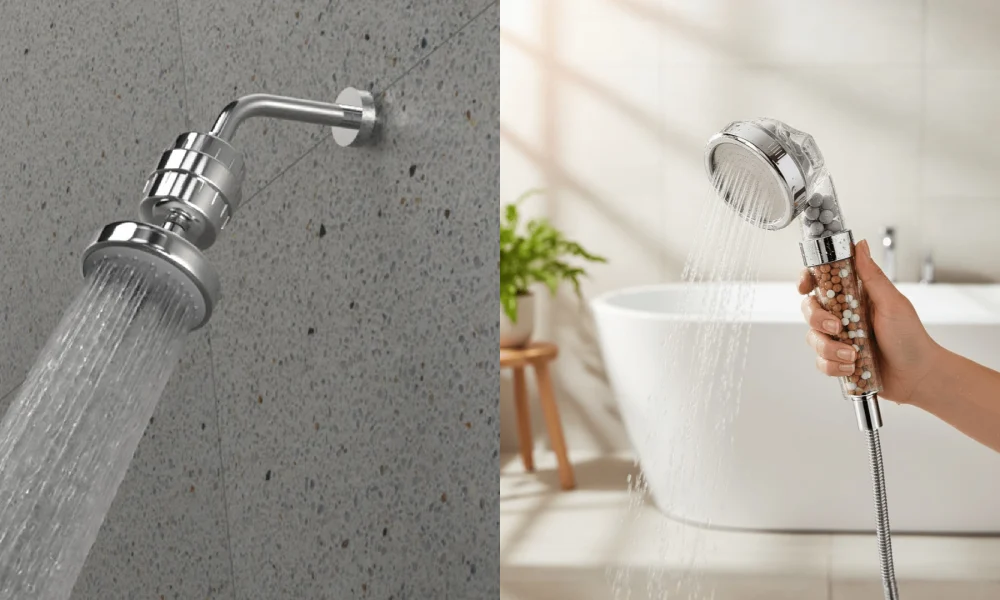
You want filtered shower water. You have two ways to get it. The first is an inline filter. It is a separate unit. It sits between your wall outlet and your existing showerhead. The second is a built-in filtered showerhead. It combines the filter and showerhead into one unit.
Both filter your water. The choice depends on your bathroom, your budget, and how much flexibility you want.
What Is an Inline Shower Filter?
An inline filter is a separate housing unit. You screw it onto your shower arm. Then you screw your showerhead onto the filter outlet. Water passes through the filter first, then comes out through your showerhead as normal.
The POWERBOX™ shower filter works this way. You keep your existing showerhead. The filter sits between the wall and the head. Install takes about two minutes without tools.
The main benefit is flexibility. You keep the showerhead you already have. If you move house, the filter comes with you. If you want to upgrade your showerhead later, you only swap the head. The filter stays in place.
Inline filters also usually cost less upfront. The POWERBOX™ unit includes two cartridges. Your showerhead stays the same.
What Is a Built-in Filter Shower Head?
A built-in filtered showerhead combines both parts into one unit. The filter cartridge sits inside the showerhead body. You remove your existing showerhead and install the new unit directly onto the shower arm.
The look is cleaner. There is no separate housing below the arm. The filter sits inside the head itself.
The trade-off is flexibility. You are locked into that showerhead’s spray pattern and design. When the filter cartridge needs replacing, you often need that brand’s cartridge. Prices vary and stock can be limited in Australia.
If the showerhead design gets discontinued, cartridge supply becomes a problem.
How Does Filtration Compare?
Both types can use multi-stage filtration. The format does not decide the filtration quality. What matters is what sits inside the cartridge.
Inline filter cartridges are often larger. A bigger cartridge holds more filtration media. More media usually means longer cartridge life and better contaminant coverage.
Check the single vs multi-stage filtration guide before you decide. It explains which media types matter for Australian hard water. You need coverage for chlorine, minerals, heavy metals, and sediment. Make sure the format you choose has the right mix inside.
Which Is Better for Rentals?
Inline filters are the better choice for rentals. You install it without changing any fixture. When you move out, you unscrew it and take it with you. Your landlord’s showerhead stays there, untouched.
Built-in filtered showerheads replace the existing fixture. Some landlords allow this. Many do not. Even when they allow it, you may need to put the original head back before you leave. That adds extra work.
If you rent in Perth or Adelaide, an inline filter is the practical choice. The same applies in any other hard water area.
Which Is Better for Owned Homes?
For homeowners who want a cleaner look, a built-in filtered showerhead makes more sense. The filter sits inside the head. There is no extra housing on the arm.
The main thing to check is ongoing cost. Replacement cartridges for built-in units are usually brand-specific. Check cartridge availability and price before you commit to a brand.
With an inline unit, the housing stays on your shower arm long-term. Your showerhead choice stays separate. You can change the showerhead any time without touching the filter.
Inline vs Built-in: Quick Comparison
| Inline Filter (POWERBOX™) | Built-in Filter Shower Head | |
|---|---|---|
| Keeps existing showerhead | Yes | No |
| Good for rentals | Yes | Limited |
| Upfront cost | POWERBOX™ shower filter | $60-$150+ |
| Cartridge availability | Standard size | Brand-specific |
| Visible housing | Yes (below arm) | No |
| Install time | 2 minutes | 5-10 minutes |
| Portability | Easy to move | Less practical |
Which One Should You Choose?
Choose an inline filter if you rent. Choose it if you already have a showerhead you like. It is also the lowest-cost entry point. The filtration quality matches or beats most built-in options.
Choose a built-in filtered showerhead if you own your home. Check that cartridges will stay available in Australia. Choose this if looks matter more to you than flexibility.
The POWERBOX™ shower filter for hard water is an inline unit. It fits standard 1/2-inch shower arms. It works with wall-mounted, handheld, rain, and combo showerheads.
Frequently Asked Questions
What is the difference between an inline shower filter and a built-in filter shower head?
An inline shower filter is a separate housing unit that sits between your wall outlet and your existing showerhead. A built-in filter shower head combines the filter and showerhead into one unit. Inline filters let you keep your existing showerhead and are easier to move. Built-in units have a cleaner look but use brand-specific cartridges.
Is an inline shower filter good for rental properties?
Yes. An inline filter attaches to the shower arm without changing any existing fixture. You can install and remove it in minutes. When you move out, you take it with you. Your landlord’s showerhead stays untouched. It is the most practical filter option for renters in hard water areas.
Do inline shower filters reduce water pressure?
A well-designed inline filter has minimal effect on water pressure. There is a small amount of resistance as water passes through the filter housing. Most users do not notice any difference. If pressure drops noticeably, the cartridge may need replacing.
Can I use any showerhead with an inline shower filter?
Yes, if your showerhead has a standard 1/2-inch thread. Most Australian showerheads use this standard size. The POWERBOX™ inline filter uses a 4-point 1/2-inch thread and fits wall-mounted, handheld, rain, and combo shower setups.