
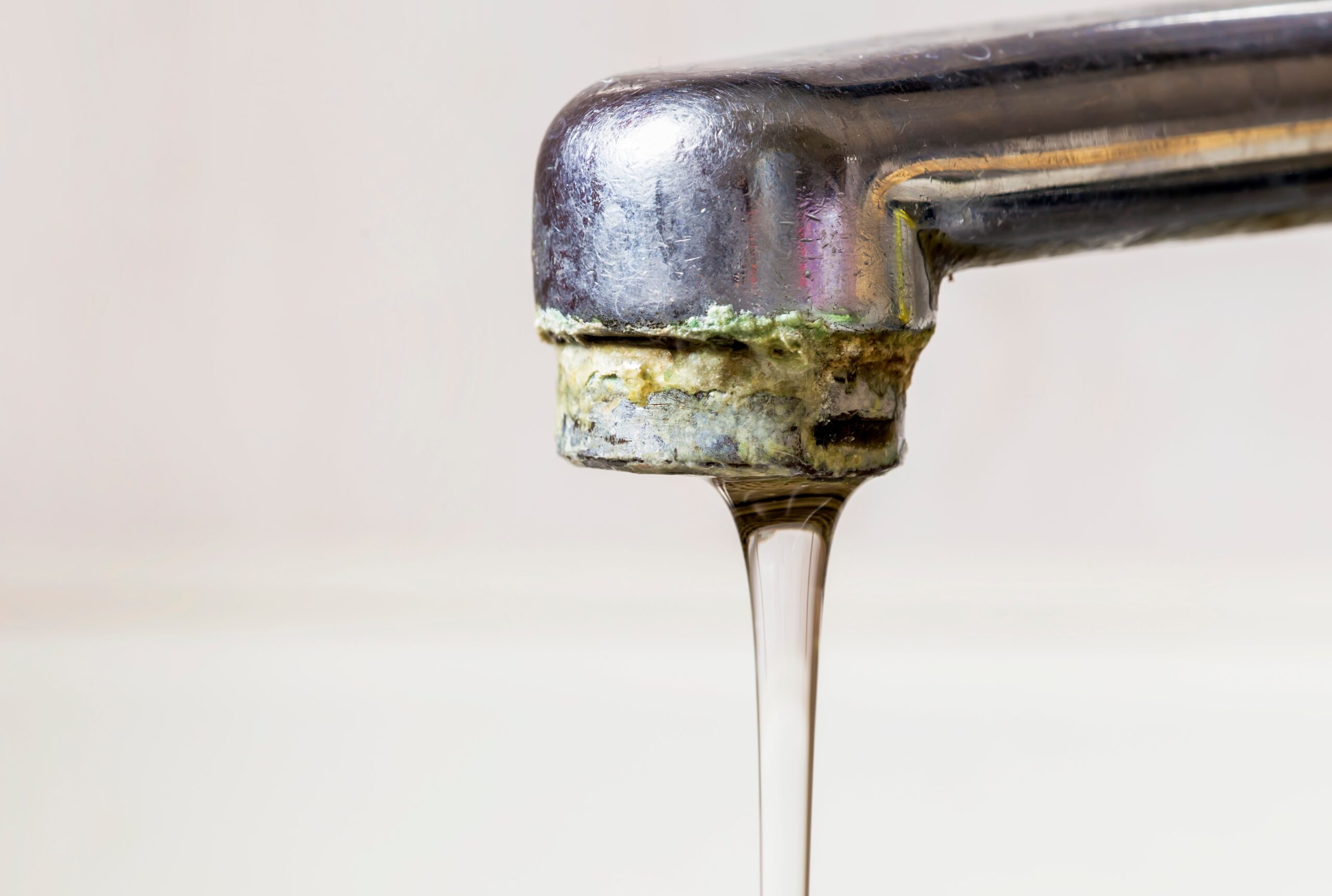
Hard water forms when rainwater moves through rock and soil that contain calcium and magnesium. The water picks up those minerals. By the time it reaches your tap, it carries a decent mineral load.
About 30% of Australian households deal with hard water every day. Perth and Adelaide have the hardest tap water of any Australian capital city. That is down to geology.
How rainwater becomes hard water
Rainwater starts out soft. It contains almost no dissolved minerals. It picks up minerals as soon as it touches the ground.
Water is a good solvent. It dissolves minerals easily as it moves through rock. The longer it stays underground, the more minerals it picks up.
The main minerals are calcium and magnesium. They come from rock types like limestone, chalk, dolomite, and gypsum. These rocks are common across many parts of Australia.
When water passes through limestone, it dissolves calcium carbonate. When it passes through dolomite, it picks up both calcium and magnesium. That is hard water.
Groundwater vs surface water
The source of your water matters.
Surface water (rivers, dams, and reservoirs) stays above ground. It has less contact with mineral-rich rock. Cities that use surface water usually have softer water. Melbourne draws from the Yarra and Thomson catchments. Sydney draws from protected upland catchments. Both cities have soft water.
Groundwater (water from underground aquifers and bores) is different. It moves through rock for years. It picks up large amounts of calcium and magnesium. Cities that rely on groundwater usually have harder water.
Perth is the clearest example. A large part of Perth’s water supply comes from the Gnangara Mound aquifer. This is a limestone aquifer. Water filters through limestone for years before it is extracted. Perth’s average hardness is 96 mg/L. The northern suburbs reach 228 mg/L.
Adelaide draws from the River Murray. It also uses groundwater from South Australian aquifers. Average hardness runs 97 to 103 mg/L. Northern suburbs like Salisbury reach 120+ mg/L.
Check how your city compares in our guide to hard water areas in Australia.
The two types of hard water
Hard water comes in two forms: temporary and permanent.
Temporary hardness comes from calcium bicarbonate. You can remove it by boiling the water. The calcium carbonate drops out as limescale. That is why your kettle furs up.
Permanent hardness comes from calcium and magnesium sulfates. Boiling does not remove these. You need filtration or softening to deal with permanent hardness.
Most Australian hard water contains both types. Boiling your water removes some minerals. It does not remove all of them.
Why Australian hard water is different
Australia’s geology concentrates hard water in specific regions.
Perth sits above the Swan Coastal Plain. This is a sedimentary landscape built on limestone and sand. Groundwater absorbs minerals as it moves through it. The Gnangara aquifer extends under Perth’s northern suburbs. Those suburbs test harder than the south. That is why.
Adelaide’s main surface water source is the River Murray. The Murray flows through calcareous, or calcium-rich, soils for most of its length. It carries dissolved calcium to Adelaide’s treatment plants.
Melbourne draws from the Yarra and Thomson catchments in the Dandenong Ranges. These are granite-based, low-mineral catchments. Granite does not dissolve into water like limestone does. Melbourne’s water stays soft.
Regional bore water is often the hardest of all. Many rural properties in WA, SA, and Queensland draw from deep limestone bore water. That water often tests well above 200 mg/L. Bore water above 200 mg/L is common.
Does hard water harm you?
Hard water is safe to drink. The Australian Drinking Water Guidelines set 200 mg/L as an aesthetic guideline. It is not a health limit.
The problems are practical. Limescale builds up on shower heads, taps, and appliances. Soap does not lather well in hard water. Skin and hair can feel different after showering. Appliances like washing machines and dishwashers wear faster.
Want to check your own water? Use a test strip or the soap method. Read our guide on testing for hard water at home.
What is not a cause of hard water
One common mistake is blaming ion exchange. Ion exchange does not cause hard water. It treats it.
Ion exchange removes calcium and magnesium from water by swapping them for sodium ions. It softens the water. It does not create hardness.
Hard water comes from minerals in rock. It forms underground over years. No treatment process creates it.
What you can do
You cannot change the geology under your city. But you can filter the water before it reaches your body.
Filtering at the shower head is the most practical fix for most households. The POWERBOX™ hard water filter is built for Australian conditions. It fits any standard shower arm with no plumbing required. Your skin and hair feel the difference quickly.
Want a full comparison? Read our hard water vs soft water guide.
Frequently asked questions
What causes hard water in Australia?
Hard water forms when rainwater moves through calcium- and magnesium-rich rock, like limestone. Perth draws from the Gnangara limestone aquifer. Adelaide draws partly from the mineral-rich River Murray. Both result in high mineral levels at the tap.
Why is Perth water so hard?
A large part of Perth’s water supply comes from the Gnangara Mound aquifer. This is a limestone aquifer. Water filters through limestone for years, absorbing calcium and magnesium. Northern suburbs like Wanneroo and Joondalup reach up to 228 mg/L.
Is hard water caused by water treatment?
No. Hard water forms naturally underground. Treatment processes like ion exchange soften hard water. They do not create it.
Is temporary hardness the same as permanent hardness?
No. Temporary hardness is caused by calcium bicarbonate and can be removed by boiling. Permanent hardness is caused by sulfates and needs filtration or softening. Most Australian hard water contains both types.
Does hard water affect health?
Hard water is safe to drink. The Australian Drinking Water Guidelines list 200 mg/L as an aesthetic guideline, not a health limit. The main issues are practical: limescale, poor soap lather, dry skin and hair after showering.