
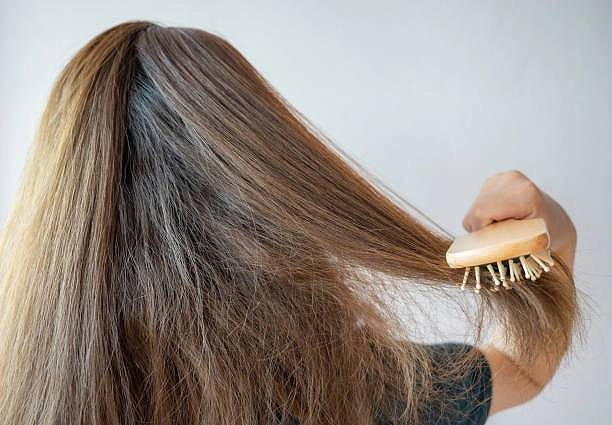
Hard water damages your hair. Calcium and magnesium bind to your hair shaft after every wash. They build up over time and block moisture from getting in. The result is dull, rough hair. No product fixes it properly.
If you’re in Perth or Adelaide, your water is among the hardest in Australia. See the worst cities in our guide to Australian hard water regions. Hard water also affects your skin. Read about what hard water does to skin for that side of the problem.
What Does Hard Water Do to Your Hair?
Calcium and magnesium are positively charged minerals. Your hair shaft is negatively charged. They attract each other. Minerals stick to the hair and coat the cuticle layer.
That coating does several things:
It blocks moisture. Your hair can’t absorb water or conditioner properly. It stays dry and brittle even after conditioning.
It makes hair rough. A healthy hair cuticle lies flat. Mineral buildup forces the cuticle to lift. Lifted cuticles cause frizz and tangles.
It dulls colour. Minerals oxidise hair dye. Colour-treated hair fades faster in hard water areas. Tones go brassy or uneven quicker.
It weighs hair down. Mineral residue makes hair feel heavy and limp. It doesn’t bounce or hold style.
Does Hard Water Cause Scalp Problems?
Hard water affects your scalp too, not just your hair strands.
Minerals and chlorine in hard water dry out the scalp. You may notice flaking, tightness, or itching after washing your hair. This is often mistaken for dandruff.
Mineral buildup also blocks hair follicles. When follicles are blocked, they can’t deliver nutrients to growing hair properly. Hair can become weaker over time.
Seeing thinning or more hair in the drain? Read our article on hard water hair loss. That article covers the specific question of whether hard water causes shedding and thinning.
How Do You Know If Hard Water Is Damaging Your Hair?
These are the signs:
- Hair feels dry and rough after washing, even with conditioner
- Hair looks dull, not shiny
- Colour fades faster than expected
- You have white residue on your shower glass or taps (same minerals in your hair)
- Hair feels different when you wash it with bottled or filtered water
- Scalp feels tight or flaky after washing
The limescale test is the simplest check. If your kettle or showerhead has white scale buildup, your water is hard.
How Do You Fix Hard Water Hair Damage?
Shower filter. A shower filter for hard water removes chlorine from your shower water. The POWERBOX™ filter uses KDF-55 media and calcium sulfite. These reduce chlorine effectively. Less chlorine means less damage to the hair cuticle and scalp.
A shower filter doesn’t remove calcium and magnesium completely. No shower-mounted filter does. But chlorine is a big part of the damage, and removing it helps.
Chelating shampoo. A chelating or clarifying shampoo binds to mineral deposits and strips them off. Use it once a week or every two weeks. It removes the calcium and magnesium buildup that sits on your hair shaft.
Deep conditioner. After a chelating wash, use a deep conditioner. The chelating shampoo cleans out the minerals. The conditioner replaces the lost moisture.
Filtered rinse. Some people collect filtered or bottled water and do a final rinse after washing. It takes the mineral load off before hair dries.
Does a Shower Filter Actually Help Hair?
It can. Many customers report softer, less frizzy hair within a few weeks.
The filter won’t fix mineral buildup already in your hair. Use a chelating shampoo for that. But it reduces the new damage coming in with every shower.
Installation takes about 5 minutes. The filter sits between your shower arm and your showerhead. No tools needed.
FAQ
Does hard water damage your hair?
Yes. Calcium and magnesium in hard water coat the hair shaft after every wash. This blocks moisture, lifts the hair cuticle, and causes dryness, frizz, and dullness over time.
How do you know if hard water is damaging your hair?
Hair that feels dry and rough after washing, dulls quickly, or loses colour faster than expected are common signs. White limescale on your taps means the same minerals are in your hair.
Does hard water cause scalp problems?
Hard water can dry out the scalp, causing flaking and tightness. Mineral deposits can also block hair follicles over time.
Does a shower filter help with hard water hair damage?
A shower filter removes chlorine, which is a major source of hair and scalp damage. Many users notice less frizz and dryness within a few weeks of installing one.
What is the best shampoo for hard water hair damage?
A chelating shampoo strips mineral buildup from your hair shaft. Use it weekly, followed by a deep conditioner to restore moisture.