
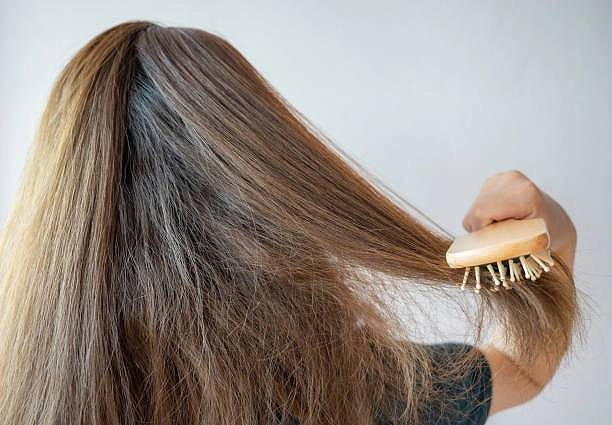
Hard water and hair are a bad match. Hard water carries calcium and magnesium. These minerals leave a thin film on your hair after every wash. Your hair can feel rough, frizz more and break more easily.
Good hair care in hard water starts with that film. This guide covers the damage, how to spot it and what helps. It also answers a common question: does a shower filter help hair?
Note: This article is general information, not medical advice. A shower filter isn’t a medical treatment for hair loss or any scalp or skin condition. Sudden hair loss, a sore scalp or a rash needs a GP or a dermatologist.
What makes water hard
Water picks up calcium and magnesium from rock and soil. The more minerals it carries, the harder the water. SA Water calls water over 200 milligrams per litre hard. That figure uses calcium carbonate as the unit.
Hardness changes a lot across Australia. Two suburbs in one city can get very different water. Your water supplier publishes figures for your area. White scale on your kettle or showerhead is a quick hint too.
What does hard water do to your hair?
Hard water leaves a film of calcium and magnesium on your hair. This film makes hair feel rough, dry, dull and flat. One lab study found hard water made hair weaker. Weak hair snaps more easily when you brush, tie or heat-style it.
Each strand has an outer layer called the cuticle. It’s made of tiny scales. Healthy scales lie flat, like roof tiles.
Flat scales reflect light, so hair looks shiny. Mineral film sits on those scales and roughens the surface.
Rough, dry feel
Hair with mineral film feels like straw. Conditioner has a harder job getting through the coating. So hair can stay dry even after you condition it. Some people first notice this after moving house or travelling.
Frizz and tangles
A rough surface catches on the strands next to it. That means more tangles and more frizz. Curly and wavy hair shows it first. Curls lose their shape and look fuzzy.
Breakage
Hard water can make hair more prone to breakage. A 2018 study in the International Journal of Trichology tested hair from 70 men. The researchers treated hair samples with hard water and with deionised water.
The hard water samples lost strength. The deionised water samples didn’t. The authors linked the lower strength to more breakage.
It’s a small lab study. It tested hair samples in a lab, not hair on a living head. So treat it as a clue, not proof.
Dull or brassy colour
Mineral film can make colour look dull. Some people with dyed hair find blonde and red tones go brassy sooner. Research on hard water and hair dye is thin. So we don’t claim more than that.
Flat, heavy hair
Buildup adds weight. Fine hair can look limp a day after washing. It won’t hold volume or a blow-dry for long.
Does hard water affect your scalp?
It can. Soap and hard water minerals can leave a residue on your scalp. Some people then feel tightness, itch or flaking after washing their hair. But these signs have many causes. A flaky scalp alone isn’t proof your water is the problem.
Soap reacts with calcium and magnesium. That reaction makes soap scum. You see the same scum on shower glass. On your scalp it can feel like a tight, waxy layer.
Your scalp is skin. So the question goes wider than hair. You might be wondering: does hard water dry skin? Our skin guide answers that.
Hair loss is a separate question
Hair in the drain is a different worry. Breakage snaps the hair along its length. Shedding comes out from the root.
Hard water isn’t a cause of pattern baldness or alopecia areata. We explain whether hard water can cause hair loss on its own page.
How do you know hard water is affecting your hair?
Look for hair that feels rough and dry right after washing, even with conditioner. Check for dull colour, more frizz and snapped ends. Then look for white scale on your taps and shower glass. Hair signs plus scale together suggest hard water is part of the cause.
These are the common signs:
- Hair feels rough or waxy straight after you wash it
- Conditioner doesn’t soften it the way it should
- Hair looks dull, even when clean
- Colour looks brassy or flat sooner than it used to
- You find short snapped pieces on your brush or pillow
- Shampoo lathers poorly
- White scale builds up on your showerhead, taps and screen
Try the holiday test. Wash your hair somewhere with soft water, or use bottled water for one wash. Compare how it feels. A big difference points to your home water.
How do you fix hard water hair damage?
Remove the mineral film first, then stop new film building up. A chelating shampoo lifts the buildup, and a deep conditioner puts moisture back. A final rinse with filtered water helps too. Snapped ends won’t repair, so trim them and let new hair grow in.
Work through these steps in order.
1. Use a chelating or clarifying shampoo
A chelating shampoo grabs mineral deposits and washes them out. Clarifying shampoos strip buildup too. Use one every one or two weeks. More often can dry your hair out.
2. Follow with a deep conditioner
Chelating shampoos clean hard. So your hair needs moisture straight after. Leave a deep conditioner or mask on for a few minutes. Rinse it well.
3. Do a final rinse with filtered water
Some people finish with a jug of filtered or bottled water. It’s a small job. It stops a last layer of minerals drying onto your hair.
4. Handle wet hair gently
Wet hair is at its weakest. Use a wide-tooth comb. Start at the ends and work up. Turn down the heat on your dryer and straightener.
5. Trim the broken ends
You can’t glue a split end back together. A trim removes the damage. It also stops splits running further up the strand.
Does a shower filter help hair?
It may help. Our filter reduces chlorine, heavy metals, sediment, calcium and magnesium. So less mineral film may reach your hair each day. But it won’t remove buildup already on your hair. It also isn’t a treatment for any scalp condition.
A shower filter works on the water coming out of your shower. It doesn’t clean your hair. So think of it as prevention, not repair.
Use a chelating shampoo to clear the old buildup first. The filter then deals with what comes in next.
Our filter uses several media layers:
- PP cotton and a stainless steel mesh catch sediment
- KDF-55 reduces chlorine and heavy metals, and it works in hot water
- Calcium sulfite and activated carbon reduce chlorine
- Mineral and ceramic media sit in the final layers
It may also help limit limescale on your showerhead and fittings.
A shower filter isn’t a water softener. A softener treats the whole house through ion exchange. A shower filter treats one shower. It’s a smaller, cheaper step for your hair and skin.
Our shower filter for hair packs these media into one multi-stage cartridge. It fits standard 1/2-inch shower arms.
It sits between your shower arm and your showerhead. You don’t need tools. Thread tape and rubber rings come in the box.
A cartridge typically lasts 2-6 months in a home. The manufacturer rates it at about 38,000 litres (10,000 US gallons). Two cartridges come in the box.
Where to start
Start with a chelating wash this week. See how your hair feels after it.
Does the roughness come back within days? Then look at your water. Fit a shower head water filter to cut chlorine, calcium and magnesium at the shower. So less buildup reaches your hair.
Disclaimer
This article is general information about hard water and hair care. It is not medical advice. A shower filter is not a medical treatment for hair loss, eczema or any scalp or skin condition. If you have a diagnosed scalp or skin condition, consult a dermatologist. Start with your GP, who can refer you. healthdirect explains how seeing a dermatologist works. For sudden or patchy hair loss, see your GP.
Last reviewed September 2026 by Lena Hartman
Frequently Asked Questions
What shampoo is best for hard water hair?
A chelating shampoo is the best choice for hard water hair. It binds to calcium and magnesium and washes them out. Use it every one or two weeks, with your normal gentle shampoo in between. Follow it with a deep conditioner, because chelating formulas can leave hair dry.
Can hard water damage to hair be reversed?
Partly. A chelating shampoo removes the mineral film, so hair feels softer and looks shinier again. You can’t fix snapped and split ends, so you trim those off. New hair grows from the root without that damage, and the problem fades with time.
Does hard water make curly hair frizzier?
It can. Curly hair is drier by nature, so mineral film shows up faster. The rough surface stops curls clumping together, so you see more frizz and less definition. Clearing the buildup and adding moisture usually brings some shape back to your curls.